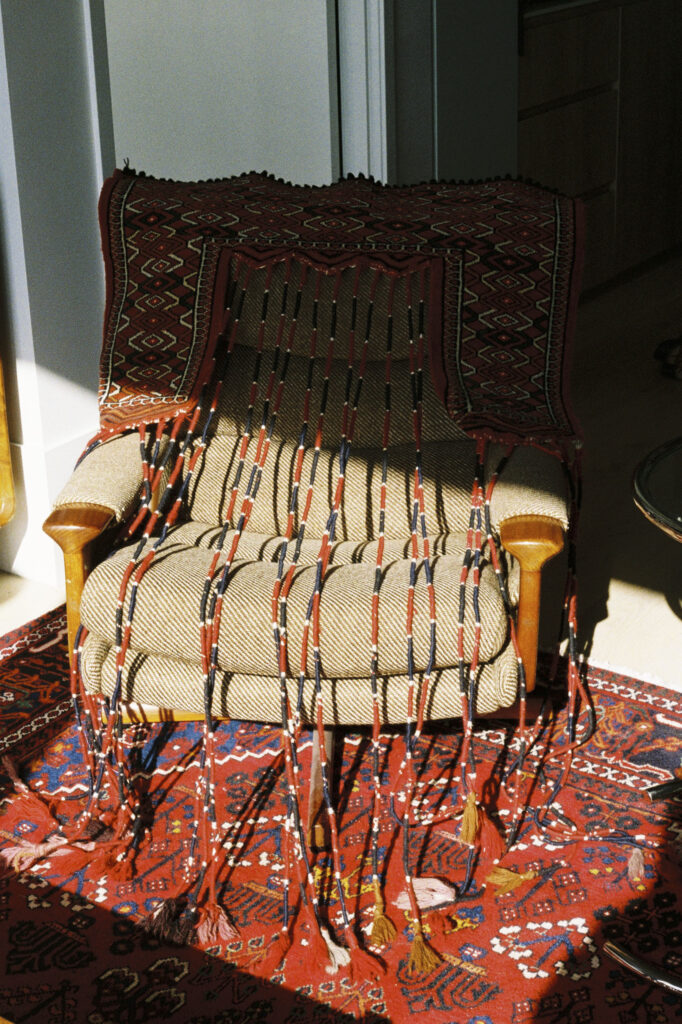
I bought a Turkmen rug from Sam, which is how I came to know of his business. Because beyond the obvious attraction of wanting a rug, I have a piece of plywood over floor boards where a fireplace used to be that needed concealing. I found Sam on Marketplace which has really become the mall of our time, and after going through his Instagram feed realised that Teak Daddy was a relatively new venture and I was interested in understanding: why rugs?
Sam is an electrician, or rather, was — because in a relatively short period of time he has managed to build an interest into an income. There is a tendency to romanticise or idealise the idea of doing what you love for a living. But making something you love financially sustainable is a different proposition altogether.
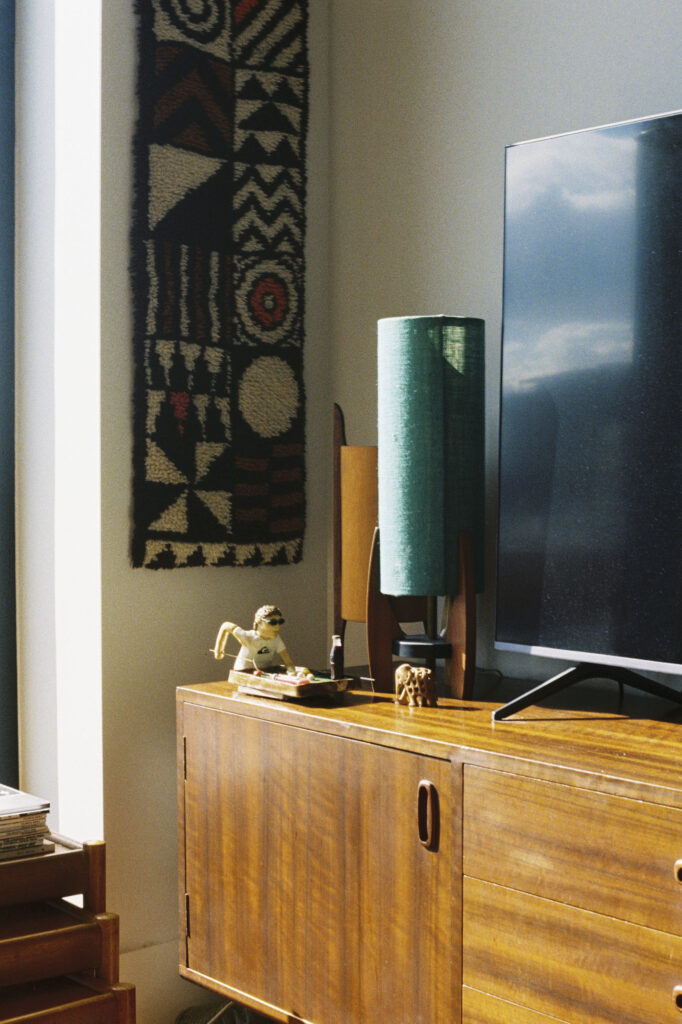
We spoke about the small universe that is our home – our relationship with this space, creating an environment that is comfortable and the things we collect over time that create a sense of home. This space becomes a lens through which you understand a person. On the subject of comfort, I watched a video of Dieter Rams pointing at things he does not like the other week and the comments he makes about function, resource and material use relate to some of what Sam shares in our conversation.
Something else we discussed was our relationship to material value, and this is something that perhaps deserves more attention given the growing acceptance of counterfeit designs, and the way the word ‘dupe’ has become an entry point for rationalising this sort of consumption. Many people may not even realise they are buying a copy of something with an original — perhaps a rare one, or one held in the permanent collection of the Museum of Modern Art (MoMA). There is also a feeling you get from being online that there is a lot of copying, and eventually all the interiors begin to look the same. There is overexposure too, where a particular sofa or chair becomes fetishised through curated digital content, or because a creator has it — or a replica of it.
But ultimately, I think something I read in one of my books, Interior Architecture and Decoration by Alain Demachy, is true. Discussing objects d’art and period furniture, he writes: “You begin by being interested, you become somewhat of a connoisseur and you end up a collector. […] A new kind of collector is emerging, the cultivated modern man who likes to have around him pictures and objects d’art chosen with discernment, not merely in order to embellish his surroundings or for the sake of impressing other people, but because they offer him a way of expressing his personality.” You get a sense of that here.
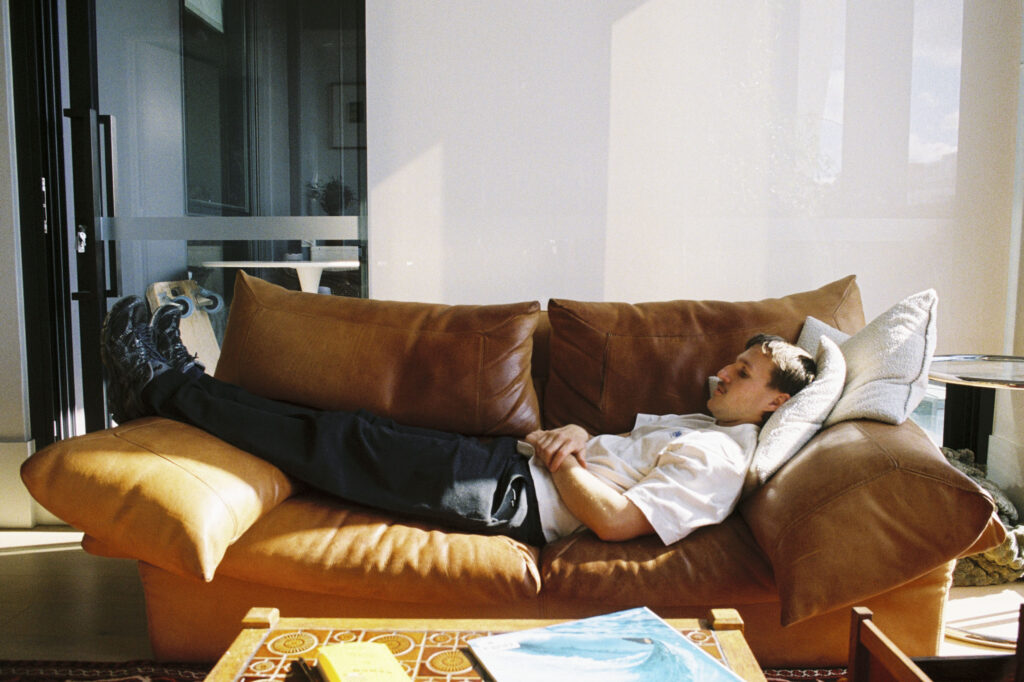
How do you describe what you do and how did you get here?
I source and sell vintage furniture, lighting and hand-knotted rugs. It started with furnishing my apartment when I moved in last year. I’d spend weekends hunting through Marketplace, even weekdays. I was also looking through auctions and vintage stores, especially places like Vinnies, Savers and Retropolis in Preston, just looking at cool stuff. Before long, I realised I enjoyed the hunt as much as living with the pieces, so Teak Daddy naturally grew from there.
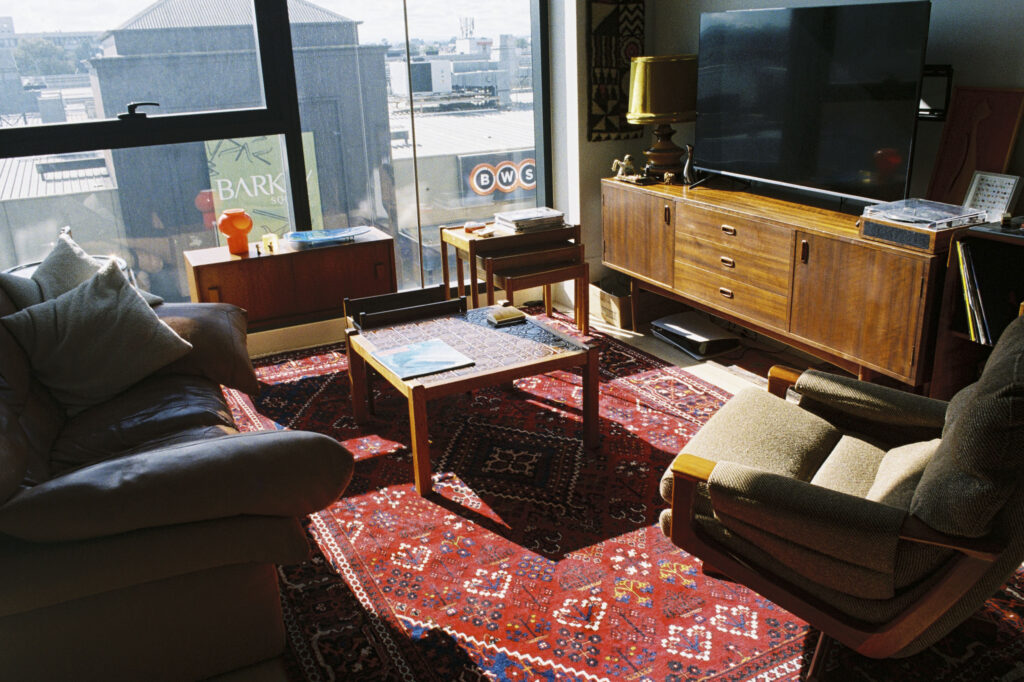
Was there a particular piece that made you realise this was something you wanted to pursue?
It’s funny because when I was moving into my place last September, I knew nothing about mid-century furniture. I’d always had an eye for cool stuff, I’ve been into vintage clothing, shoes and T-shirts but I think what started it was when I was working at my old football coach’s house. I needed a table for my apartment and mentioned it to him. He said, “My brother actually has one he’s getting rid of,” and they gave it to me. It was a beautiful Parker table, and I remember getting it, looking at it and thinking, this is really beautiful for something that was made in the ’60s.
From there, I started researching the value of pieces from that era, and it turned into a bit of a rabbit hole first learning about mid-century furniture, then postmodern furniture, then hand-knotted rugs. It flowed from there.
Is it challenging to have no separation between your work and living and then to part from the pieces you source?
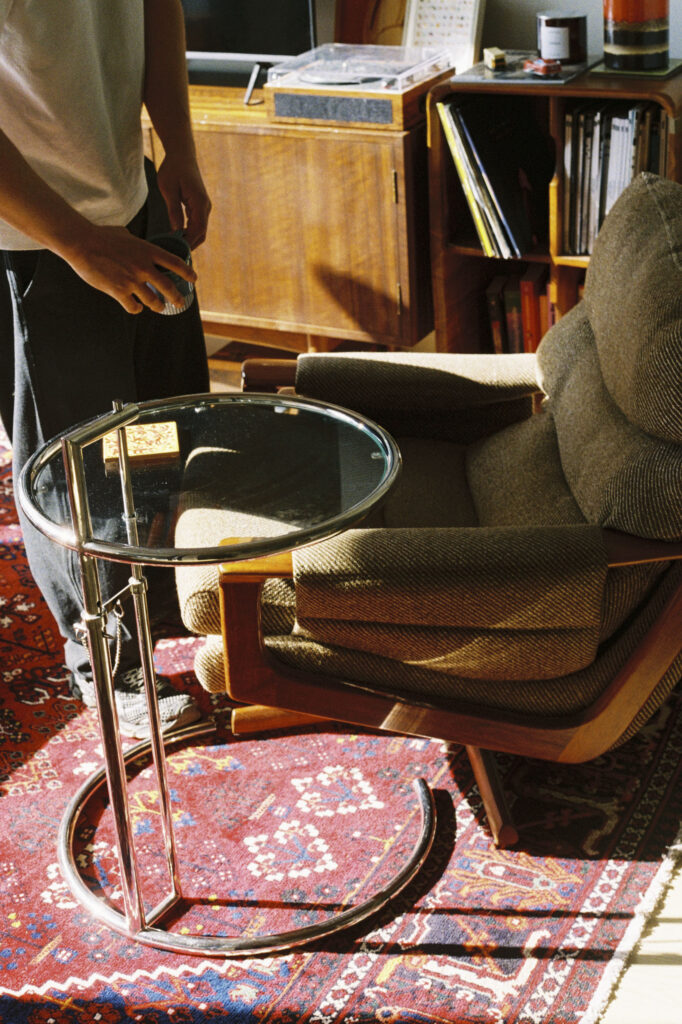
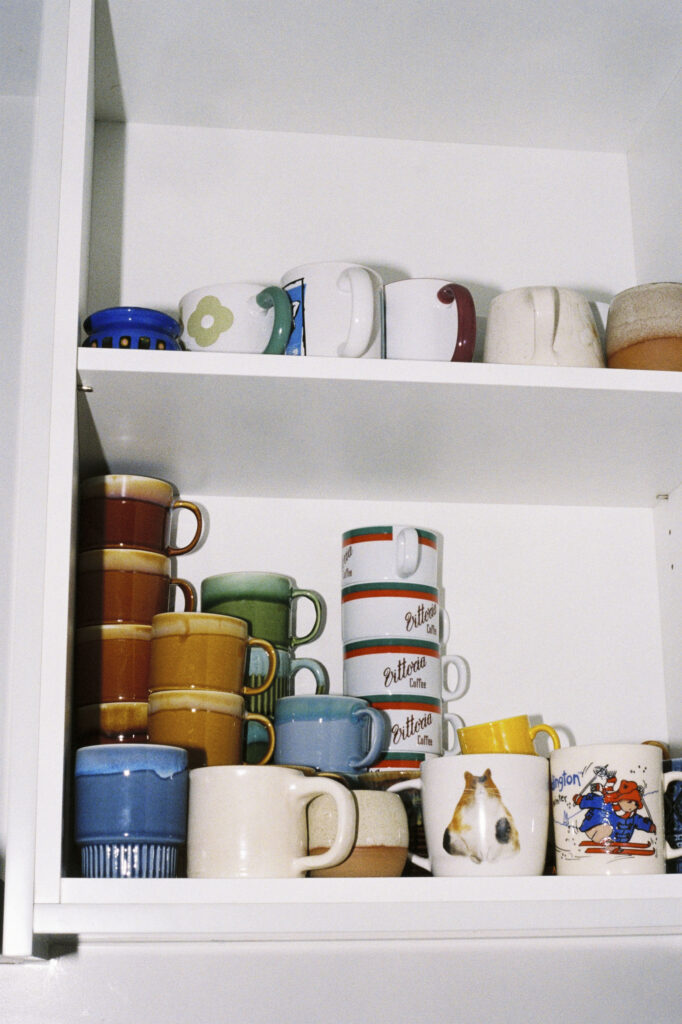
Sometimes. My apartment has become a bit of a gallery, forever rotating because I like to live with the pieces for a period of time before they move on. Sometimes I love them at the start and then end up not liking them that much, but you definitely become attached to some things. I picked up a swivel Tessa chair and it hasn’t moved from its spot, as well as little trinkets like mugs and decor that I pick up here and there. I also enjoy knowing the pieces will go to someone who genuinely appreciates them. It also means I get to start the search all over again, which is fun.
You’ve immersed yourself in this world quite quickly. How has your own understanding of value shifted?
I’ve realised that value isn’t really about the price or what is actually trending. It’s more about materials, craftsmanship and how something makes you feel in your space. A well-made chair that has lasted 60 years has a very different value to something new that was built to last five. From that, I’ve definitely become more selective and more patient in that regard.
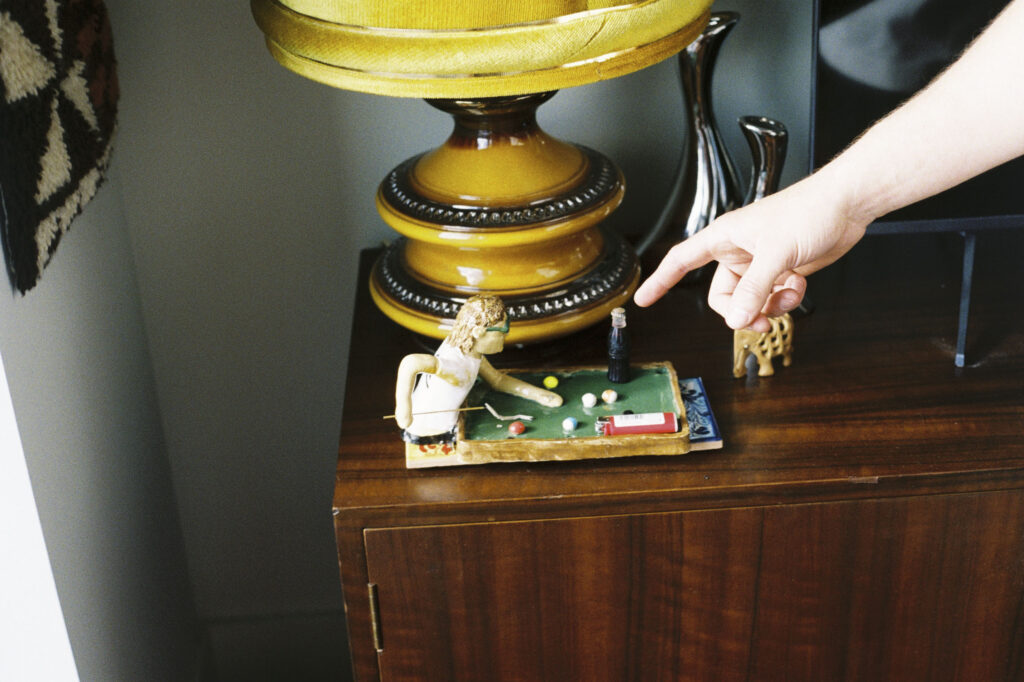
You’re forever adding to your apartment. Do you find yourself constantly rearranging?
Yes, all the time. I get excited moving things around. I think every new piece changes the conversation with everything else in the room. I’m always finding something to make the room look better, especially my living room because when I walk in, it’s the first space I see.
I sort of want it to be perfect, which can be hard. Sometimes I tend to clutter things, or I’ll end up really liking a rug but it doesn’t work with everything else. At the moment, I’m really happy with what my space looks like, but I’m sure it’s going to change in the near future.
You mentioned that sharing a home can sometimes feel transient. Was there a moment in your new apartment that made it feel like home?
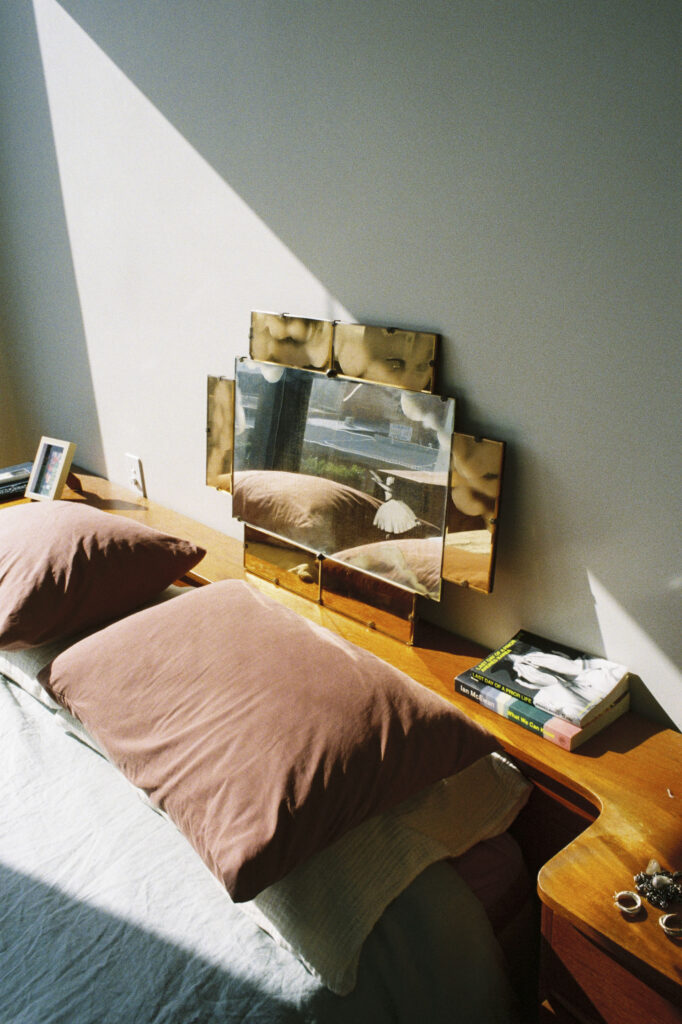
It’s funny because I was speaking to my partner about this, and I think it took a while for the apartment to feel like home, especially after my family home was sold. I’d gone from living in a share house, to living with my family, and then coming into this apartment, which was my new home. It was really hard at the start because even though I was getting really cool stuff, it was starting to become a gallery. It took me a while to realise that I needed to make the place feel more like home.
The biggest thing, I think, was getting a really comfortable couch — a couch that looked cool, but one that I could lie on and watch the footy. Being able to spend time in my apartment and chill out, rather than sitting on uncomfortable pieces that looked good but weren’t functional, made a big difference. I think that was the biggest thing — finding a comfortable couch.
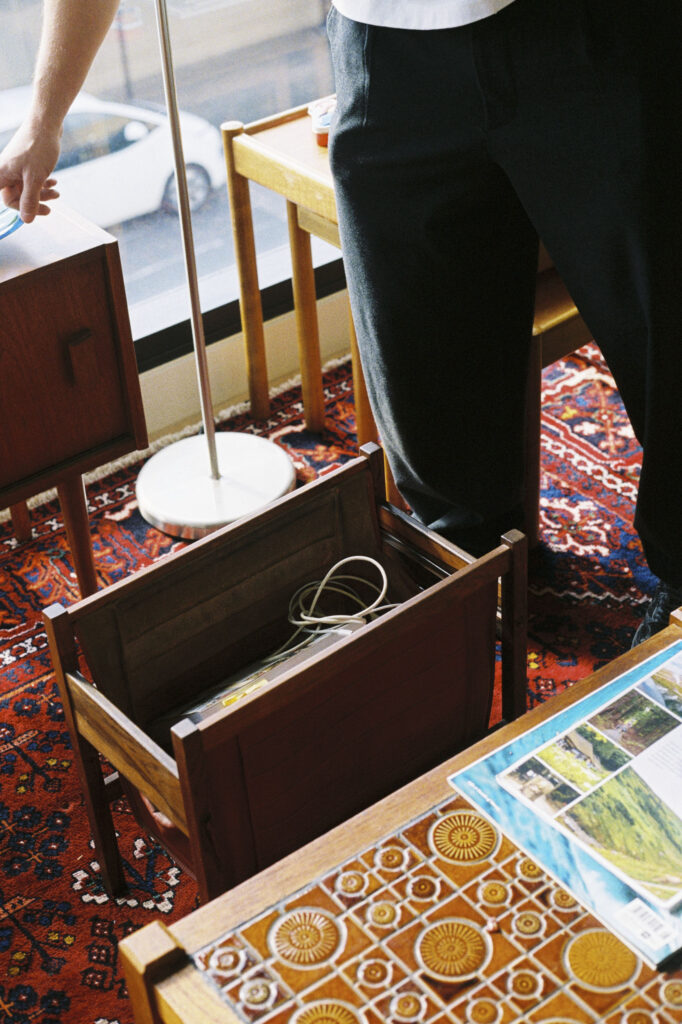
We spoke about how creating a home isn’t about having unlimited funds, and how collecting things to live amongst is an ongoing process. How does buying vintage change the way you approach acquiring things for your home?
I think people are moving away from wanting everything immediately. Especially with mid-century homes, the most interesting homes are built over a period of time. I rushed into things at the start, but I think sometimes you have to wait, perhaps up to six months, to find that piece. Collecting is a bit more intentional than just filling a gap.
Beyond buying things that you’re really drawn to, are you now at a point where you are buying with a potential client in mind?
Definitely, but it’s a balance. It’s funny because I think for myself, I find I generally have to like it before I purchase it, so I feel like if I like it, then someone else is going to like it. I feel like I have a bit of a knack for that which is a good thing and I think that is why I am in this space because I think I like things that other people like. In saying that I didn’t know what people responded to so I learned that over time. I do think about who a piece might suit while I am sourcing for sure, but if I would not have it in my home, I probably would not buy it unless someone had messaged me personally about sourcing a piece for them.
Can you tell me about a couple of pieces that you’re excited about?
Lately I’ve been really excited about antique Persian rugs, I’ve got a couple coming in that I can’t wait to open up and look at. These are hundred year old rugs, they’ve got so much history, and it’s like opening up a work of art. I also love Danish mid century furniture. I’m really excited about sourcing that and vintage Ikea lamps. I have a few of them already but whenever I get another I get really excited by them and I’m not sure if that’s because I am an electrician and that’s why these lamps fascinate me but yes, these pieces.
There seems to be a convergence between established vintage dealers and a younger generation sourcing and selling through platforms like Instagram and Marketplace. From your experience, how do you see the vintage and antiques market changing?
It is definitely going to change, the younger generation are chronically online, it feels like every man and their dog is talking about Facebook Marketplace – they’re forever hunting for something on Marketplace. People are selling more and more on Instagram because the platform is making it more of an avenue to sell and build a shop online and the younger generation is growing up with that. At the same time, the younger generation is really getting into vintage and antiques.
There’s more avenues to sell online than there were 10 years ago so I think that might hurt some of the older vintage shops especially if they don’t have an online presence. But in saying that, a physical vintage store or warehouse that houses 10 plus vintage dealers in one place is more of an activity and that’s a cool thing about vintage and antiques – it’s about going out, it’s like going on a treasure hunt and yes you can do it online but it’s not as rewarding, it’s not as much of an experience.
I’ve seen so many cool vintage sellers on Instagram and every one of them has inspired me, but I also think there are always going to be physical shops where you can go and thrift.
Sam regularly publishes items for sale on his Instagram account, and you can also follow his Marketplace profile to be notified of new listings.